№ 08Village · Fife, Scotland
Culross
A seventeenth-century Scottish burgh preserved so completely that film crews barely need to dress it.
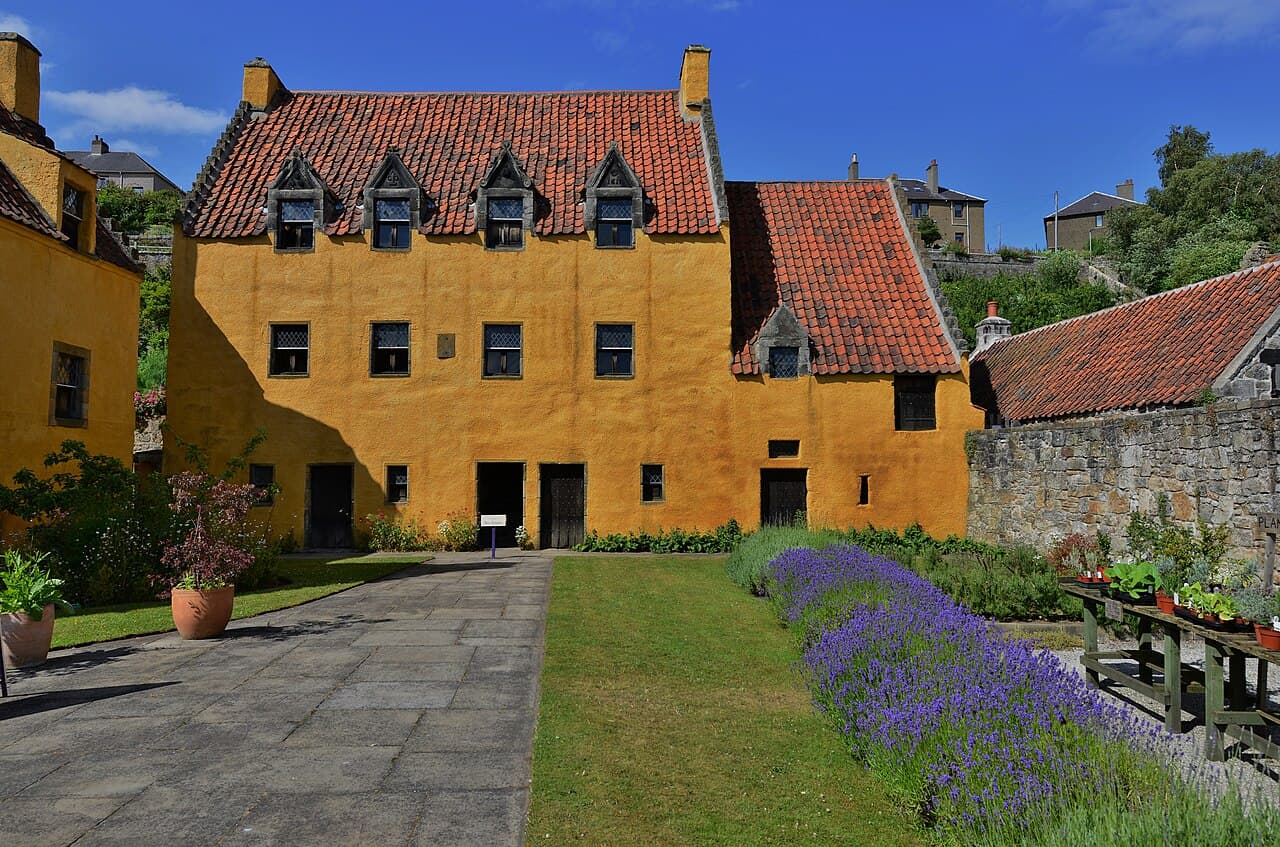
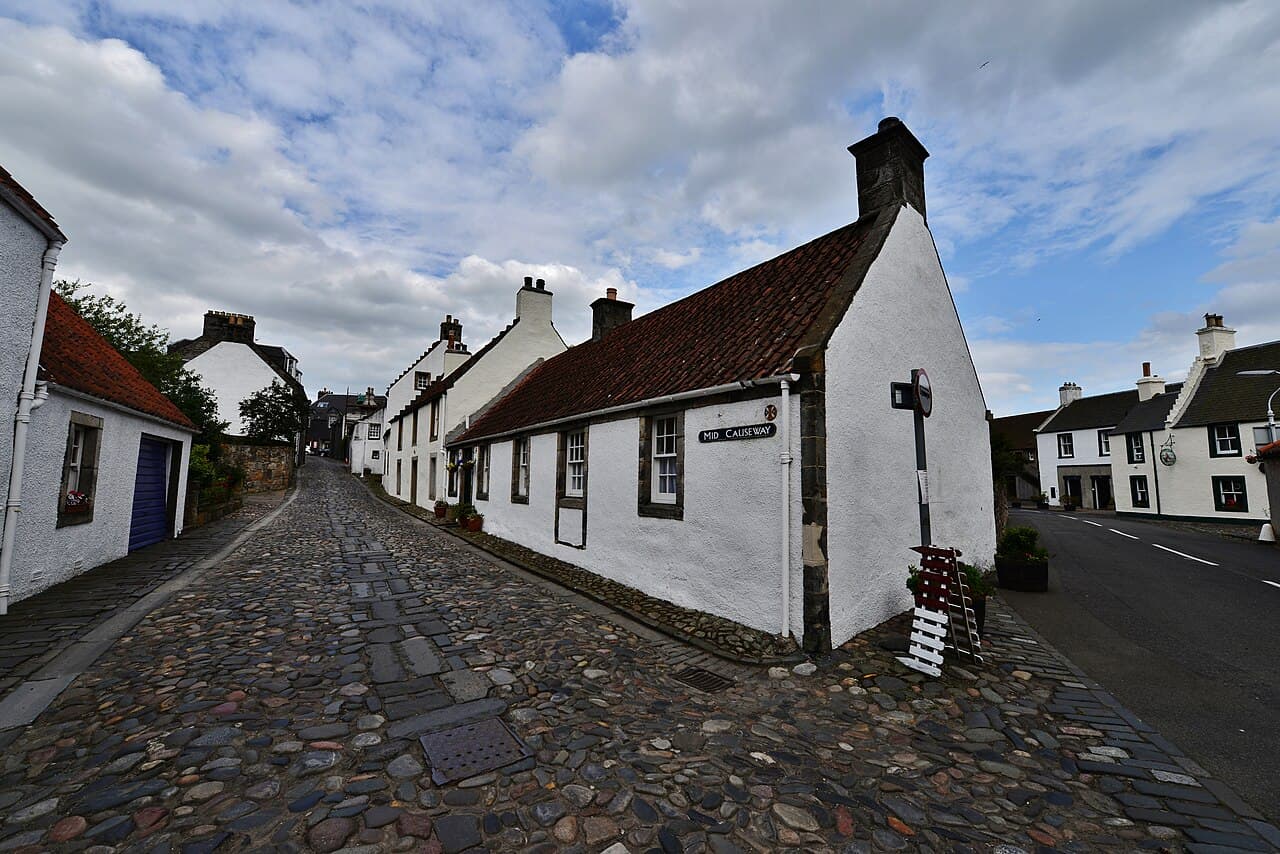
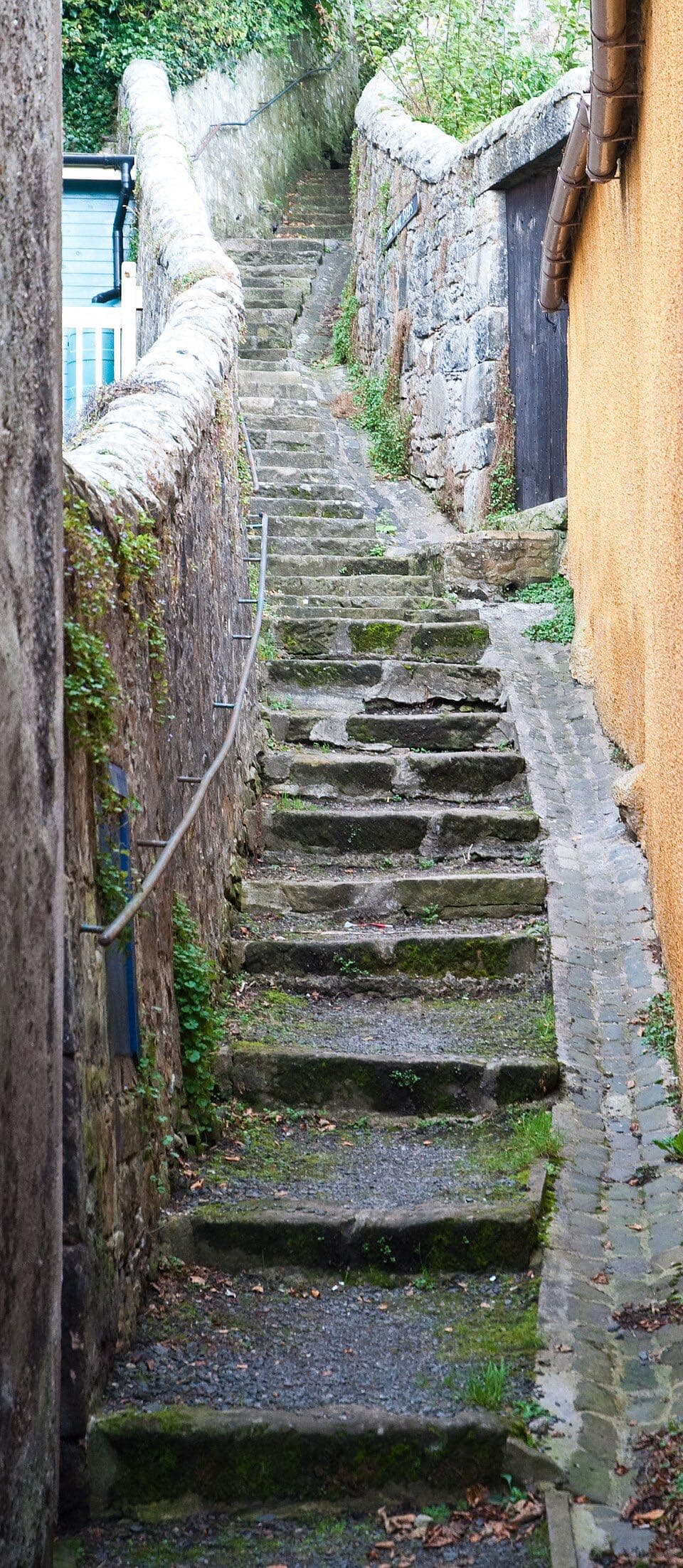
Photographs HARTLEPOOLMARINA2014 (CC BY-SA 4.0) · Phillip Capper from Wellington, New Zealand (CC BY 2.0) · Wikimedia Commons
On the north shore of the Firth of Forth sits the most complete burgh of its period in Scotland: the ochre-harled Culross Palace, cobbled wynds, a mercat cross, and rows of white-and-red houses that have barely moved since the 1600s. The National Trust for Scotland has been quietly restoring it since 1932.
Culross was once a busy little port, rich on coal and salt. When the trade died, the town simply stopped — which is why Outlander uses it as the fictional village of Cranesmuir, and why the palace garden still grows what a seventeenth-century household would have planted.
The knowledge
- Getting there
- On the Fife coast, about forty minutes from Edinburgh by car; buses run from Dunfermline.
- Best time
- Early morning or evening, when low light hits the ochre walls. The palace opens roughly April to October.
- Local tip
- Climb Tanhouse Brae to the abbey ruins above the village — most visitors never make it past the palace.
Want the next one before everyone else?
One hidden British place in your inbox, most weeks. Free, no spam.