№ 03Coast · Inner Hebrides, Scotland
Fingal's Cave
A sea cave built from hexagonal basalt columns so perfect the Victorians assumed it was architecture.
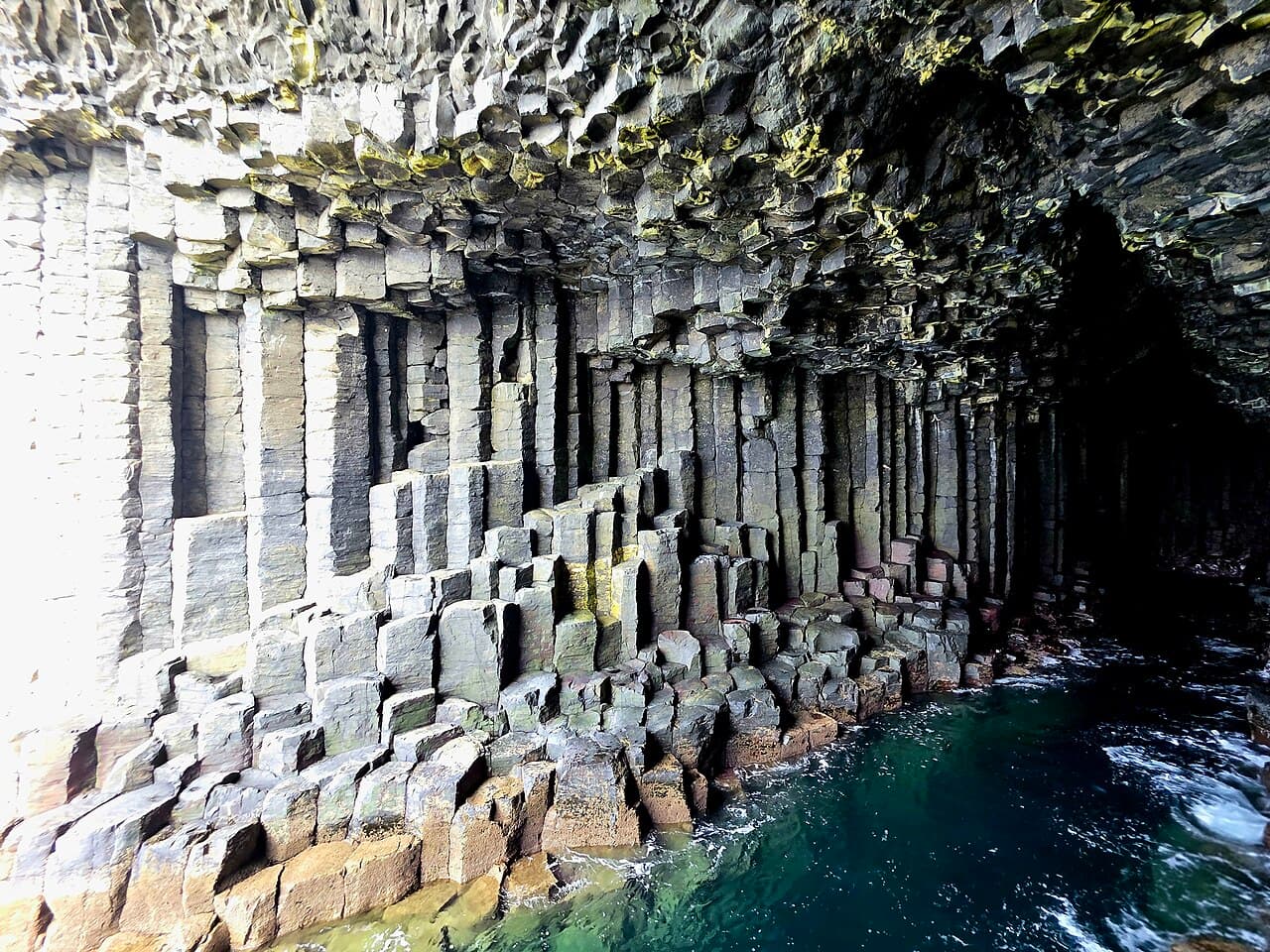
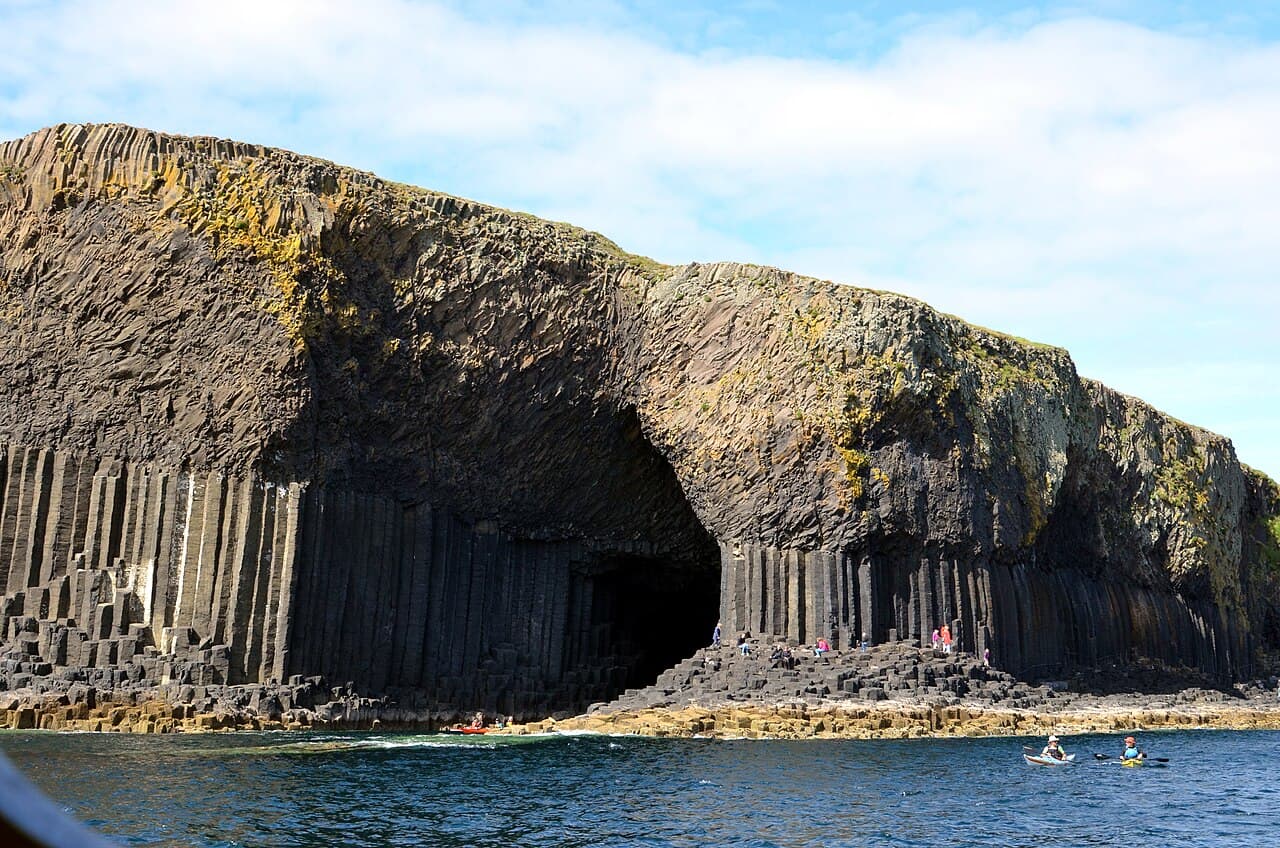
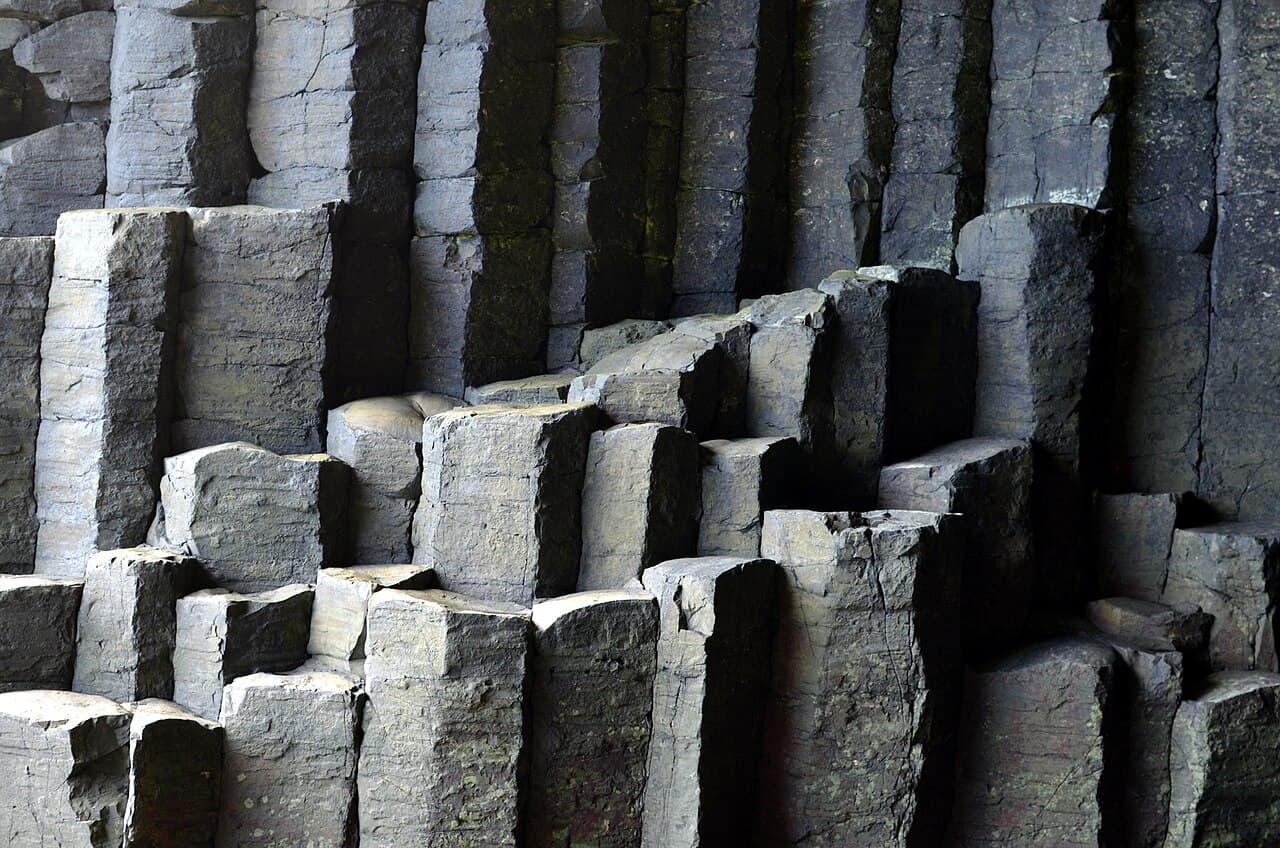
Photographs Tdhendry (CC BY-SA 4.0) · Luk~commonswiki (CC BY-SA 4.0) · Wikimedia Commons
On the uninhabited island of Staffa, west of Mull, the sea has carved a cathedral out of the same volcanic geometry as the Giant's Causeway: walls of interlocking hexagonal columns rising from a black sea. Its Gaelic name, An Uaimh Bhinn, means 'the melodious cave' — the swell booms inside it like an organ.
Mendelssohn heard it in 1829 and wrote the Hebrides Overture; Turner painted it; Queen Victoria came to see it. When the sea allows, boats land and you walk into the mouth of the cave along the broken tops of the columns, just as they all did.
The knowledge
- Getting there
- Boat trips run roughly April to October from Fionnphort and Tobermory on Mull, from Iona, and as day tours from Oban.
- Best time
- May to July — calmer seas, long light, and puffins nesting on the clifftops above.
- Local tip
- Landing depends entirely on the swell. If your trip manages to land, take it: circling the cave from the water is a consolation, not the experience.
Want the next one before everyone else?
One hidden British place in your inbox, most weeks. Free, no spam.