№ 20Beach · Shetland, Scotland
St Ninian's Isle
Britain's largest sand causeway leads to an island where a schoolboy dug up a hoard of Pictish silver.
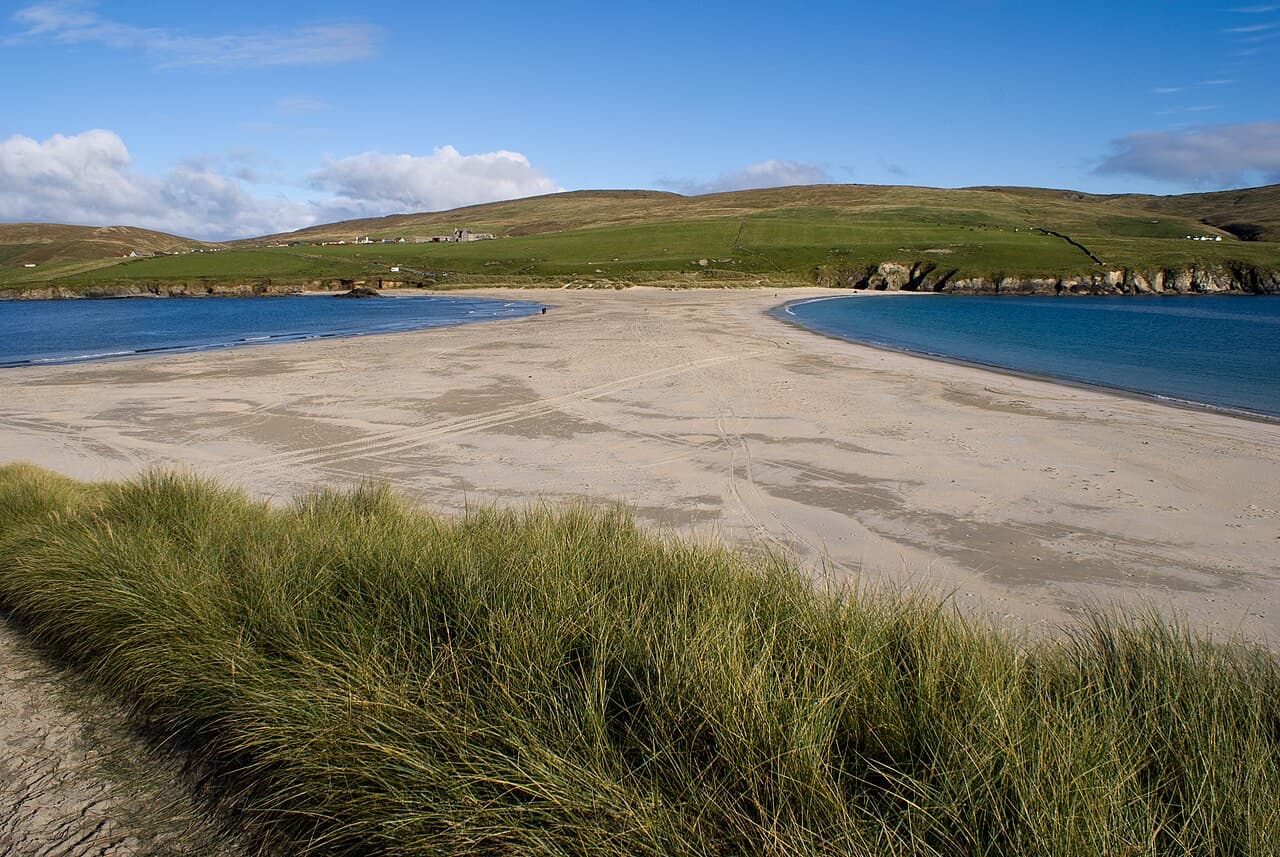
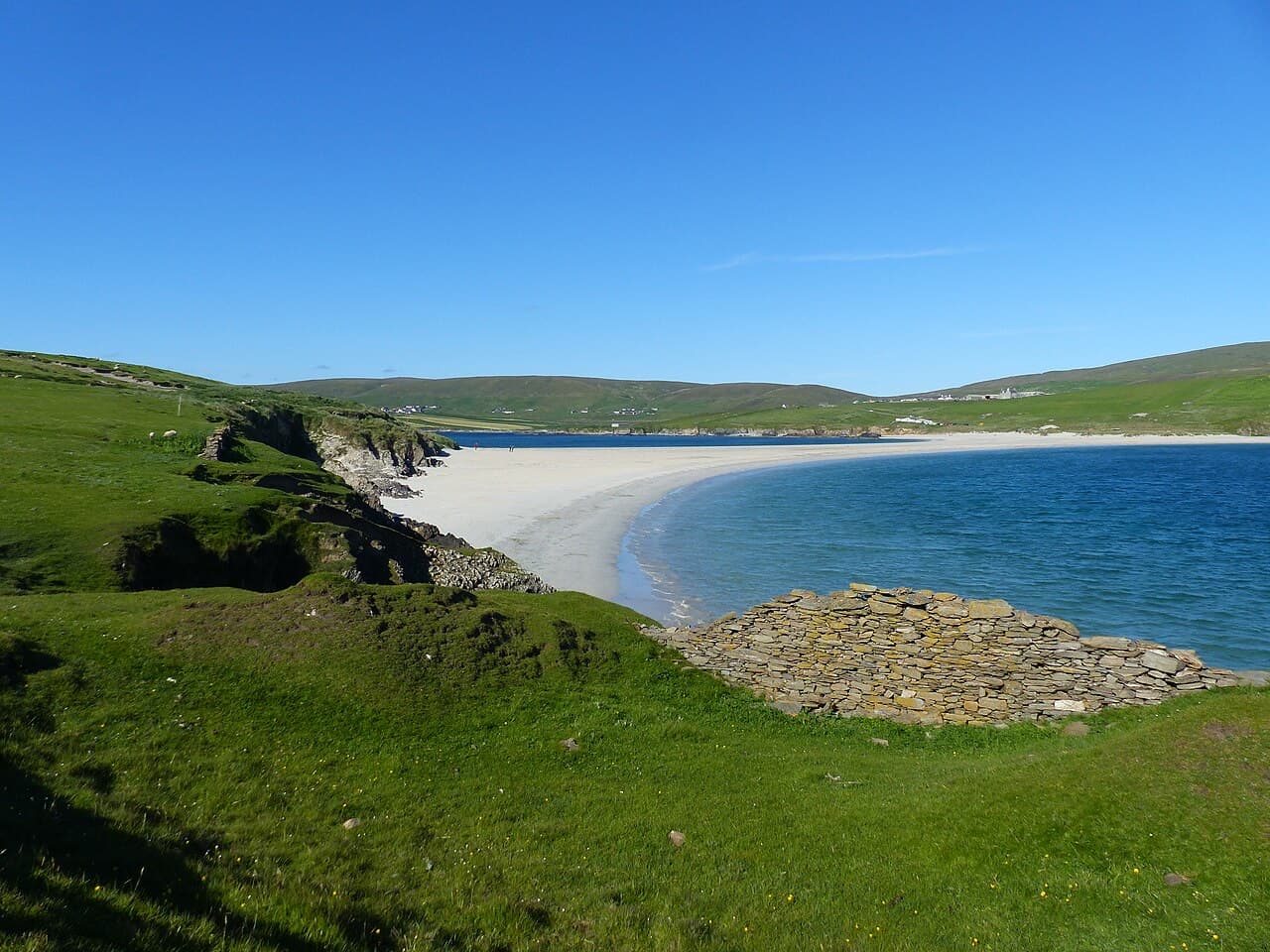
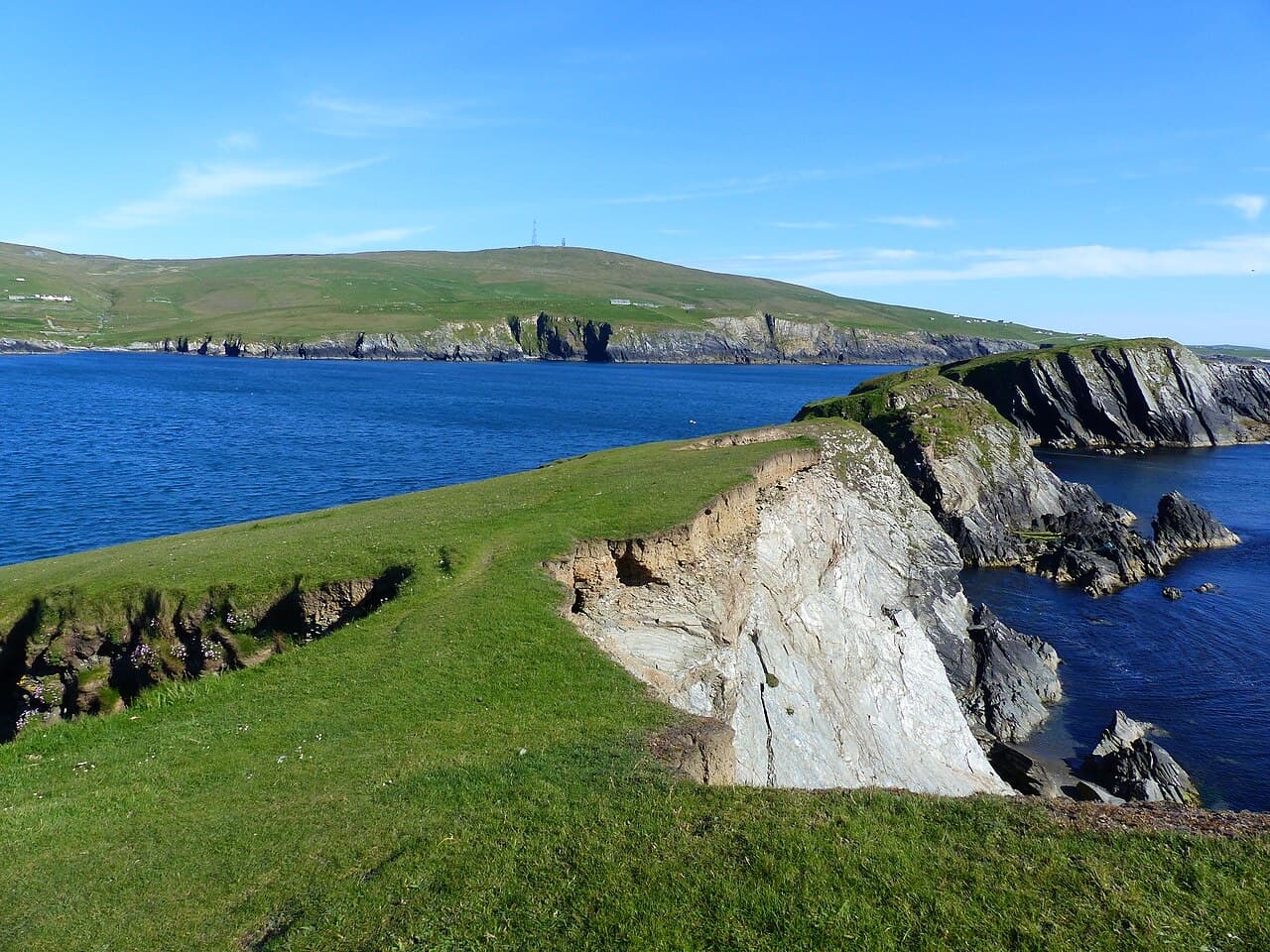
Photographs AdamKR (CC BY-SA 2.0) · Ruth Sharville (CC BY-SA 2.0) · Wikimedia Commons
St Ninian's Isle is tied to the Shetland Mainland by a tombolo — a double-curved bar of white shell sand with the sea breaking on both sides of your feet. It is the largest active tombolo in Britain, and walking it feels like a magic trick that somehow keeps working.
In 1958 a Lerwick schoolboy helping excavate the island's ruined chapel lifted a slab and found a larchwood box of Pictish silver — bowls, brooches and sword fittings, hidden from Viking raiders and never collected. The treasure is in Edinburgh; the beach, most days, is yours.
The knowledge
- Getting there
- Bigton, on the south Mainland of Shetland, about half an hour from Lerwick; park by the beach. The tombolo is walkable except in the biggest winter seas.
- Best time
- May to September for the light and the terns; the sand is at its widest after a calm spell.
- Local tip
- Replicas of the hoard are in the Shetland Museum in Lerwick — see them the same day and the empty chapel makes sense.
Want the next one before everyone else?
One hidden British place in your inbox, most weeks. Free, no spam.